
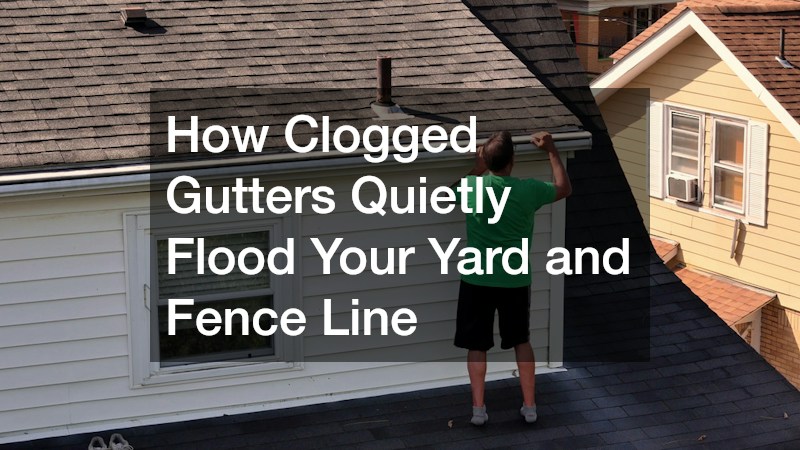
A gentle rain shouldn’t leave puddles along your fence line or soggy patches across your lawn, but if your gutters are clogged, that’s exactly what happens. Water that should travel safely through downspouts instead spills over the edge, pooling near your foundation and seeping into the soil around your property line. Over months and years, this slow, repeated flooding can erode landscaping, damage structures, and create costly problems you never see coming until it’s too late. Understanding how this cycle works is the first step to protecting your yard, your fence, and your home’s foundation.
Overflowing Gutters and Foundation Soil Saturation
When leaves, twigs, and shingle grit build up inside your gutters, water has nowhere to go but over the sides. Instead of being channeled through downspouts and away from your home, it cascades straight down along the foundation walls, soaking the same narrow strip of soil every time it rains. Over time, that soil becomes oversaturated and loses its ability to support the weight of your foundation evenly, which can lead to shifting, cracking, or settling.
This isn’t a problem that shows up overnight. It builds gradually, season after season, until you notice hairline cracks in your basement walls or doors that no longer close properly. Catching the early signs of saturated soil near your home can save you from far more expensive repairs down the road.
- Look for mulch or soil that stays wet long after rain has stopped
- Watch for small cracks forming near the base of exterior walls
- Notice if basement humidity or musty odors increase after storms
- Check whether downspouts are directing water at least three feet from the foundation
Standing Water and Yard Drainage Problems
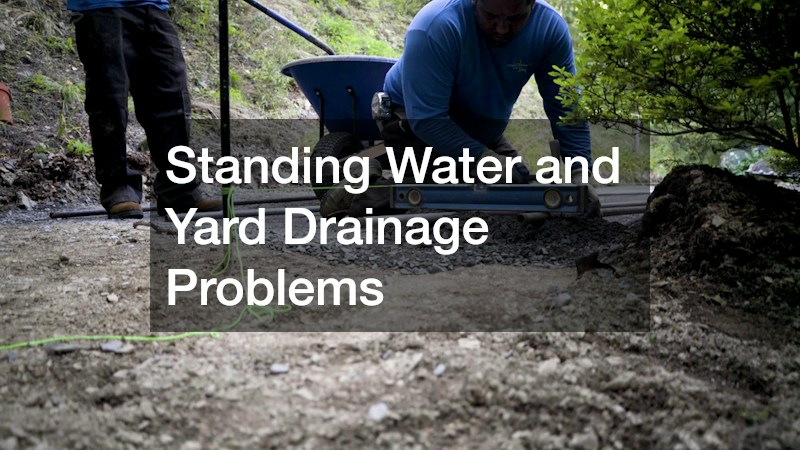
Clogged gutters don’t just affect the area right next to your house. Once water overflows, it travels across your yard, often pooling in low spots that never used to hold water before. This standing water can drown grass roots, encourage mosquito breeding, and create muddy ruts that are frustrating to walk across and expensive to regrade.
Many homeowners mistake this for a simple landscaping or grading issue, when the real source is up on the roofline. Before investing in regrading or new sod, it’s worth tracing the water back to see if a gutter overflow is the actual culprit. Fixing the gutter problem first often resolves the yard drainage issue without any additional work.
- Puddles that linger more than 24 hours after rain stops
- Soft, spongy grass in specific areas near the house
- Visible erosion channels cutting across the lawn
- Water pooling consistently near the same corner of the yard
Fence Posts and Prolonged Moisture Exposure
Fence lines often sit right in the path of runoff from clogged gutters, especially if your property slopes toward a side or back fence. Wood posts that stay wet for extended periods are prone to rot at the base, where they’re buried in soil that never fully dries out. This weakens the structural integrity of the fence over time, leading to leaning panels or posts that snap in moderate wind.
If you’re dealing with chronic moisture issues along your property line, it may be worth reconsidering the material your fence is made from. Vinyl fences hold up significantly better in consistently damp conditions since they don’t absorb water or rot the way wood does. Switching materials won’t stop the gutter overflow itself, but it does reduce one of the costliest downstream consequences of the problem.
- Inspect fence posts at the soil line for soft or crumbling wood
- Check for leaning sections after heavy rain events
- Look for discoloration or mold growth near the base of posts
- Consider post caps or gravel backfill to improve drainage around wood posts
Basement Seepage and Interior Water Damage
When gutter overflow saturates the soil around your foundation, that water eventually finds its way through hairline cracks, porous concrete, or gaps around basement windows. What starts as a damp smell can escalate into visible seepage, warped flooring, or damaged drywall. This kind of water intrusion is often misdiagnosed as a plumbing issue, since the symptoms, wet floors and musty air, can look similar.
Homeowners sometimes call in plumbers to investigate a damp basement, only to discover the source has nothing to do with pipes at all. It’s the exterior drainage, starting with the gutters, that’s pushing water toward the foundation. Ruling out plumbing first is reasonable, but checking your gutter system should be an equally early step in the process.
- Musty odors that intensify after rainfall
- Visible water stains on basement walls or floors
- Efflorescence, a white chalky residue on concrete surfaces
- Peeling paint or bubbling drywall near ground level
Downspout Extensions and Proper Water Direction
Even a perfectly clean gutter system can still cause yard flooding if the downspouts themselves are too short or poorly positioned. Water that exits right at the foundation line will soak back into the same soil you’re trying to protect. Extending downspouts several feet away from the house, and directing them toward a slope or drainage area, makes a meaningful difference in keeping water moving away from vulnerable areas.
This is one of the simplest and most affordable fixes available, yet it’s frequently overlooked. A few extension pieces and some basic grading adjustments can redirect thousands of gallons of water over the course of a rainy season.
- Extend downspouts at least four to six feet from the foundation
- Add splash blocks or underground drainage pipes for longer runs
- Confirm the ground slopes away from the house at a gentle grade
- Reposition any downspouts currently draining toward the fence line
Clogged gutters are an easy problem to ignore until the damage shows up somewhere you didn’t expect, whether that’s a cracked foundation, a soggy lawn, or a collapsing fence post. The good news is that most of these issues are preventable with regular gutter cleaning, proper downspout placement, and a bit of attention to how water moves across your property. Walk your yard and fence line after the next heavy rain and take note of where water collects. Addressing those problem areas now, before another storm season arrives, will save you time, money, and unnecessary stress.