
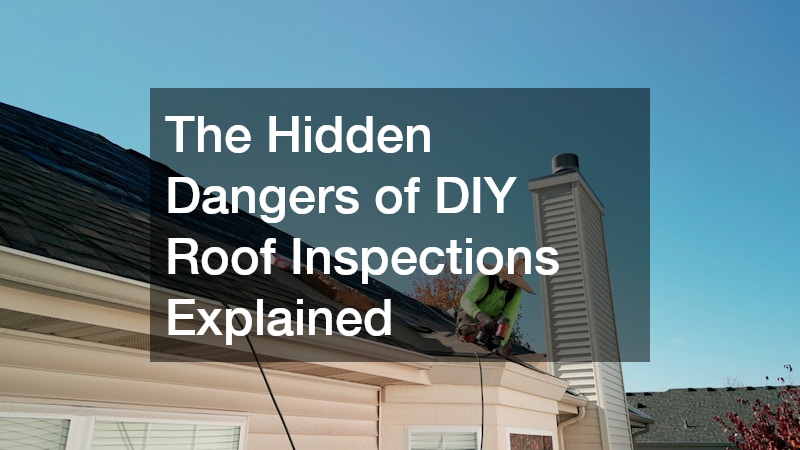
It’s a common weekend scenario: you notice a few stray granules in your gutters or a water spot on your ceiling, and your first instinct is to grab a ladder. In an era dominated by home improvement tutorials and cost-cutting life hacks, inspecting your own roof feels like a logical, proactive chore. There is a certain satisfaction in diagnosing your own home’s ailments, and saving a quick buck on an initial assessment is undeniably appealing. However, what looks like a straightforward afternoon task from the safety of your driveway transforms completely once your boots hit the shingles.
Prioritize Ground-Level Visual Assessments Over Climbing
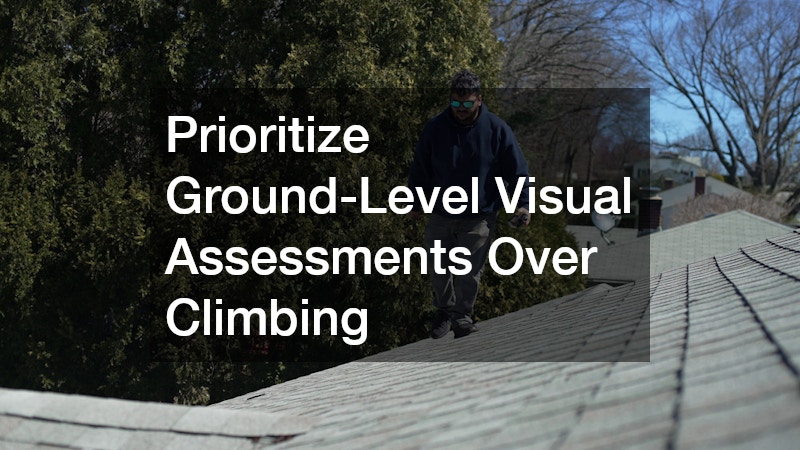
You do not need to risk life and limb on a high ladder to get a remarkably accurate snapshot of your roof’s current health. By standing back in your yard or utilizing a pair of high-powered binoculars, you can spot the vast majority of glaring issues without your feet ever leaving terra firma. Look closely at the ridges, valleys, and eaves for any obvious signs of distortion, sagging lines, or misplaced materials that look out of alignment. If you need a closer look at a specific chimney flashing or a suspicious valley, modern technology offers incredible alternatives, such as using a standard camera drone to capture high-definition footage of your roof safely.
When you carry out this ground-level assessment, keep a strict checklist of visual red flags that demand immediate professional attention. Spotting these early allows you to call a qualified residential roof contractor before a minor leak evolves into an interior disaster. Walking the perimeter of your home after a heavy windstorm or hailstorm is the smartest preventative habit you can build.
-
Curled or Buckling Shingles: Look for edges that lift upward, which indicates that the material has reached the end of its natural lifespan.
-
Granule Accumulation: Check your downspout exits for an excessive amount of sandy debris, a prime sign that your shingles are losing their protective coating.
-
Damaged Flashing: Keep an eye out for bent, rusted, or entirely missing metal strips around your chimney, vents, and dormers.
-
Sagging Roof Lines: Step back and look at the ridge of your house; any visible dipping indicates serious underlying structural or decking issues.
Once you have documented these issues from safety, you have all the leverage and information you need to initiate an honest conversation with a professional. You can hand over your photos and notes to a trusted roofing company, ensuring they know exactly where to focus their efforts when they arrive. This collaborative approach keeps you entirely safe while ensuring that no structural anomalies are left to fester and destroy your home’s equity over time.
Master Ladder Setup Mechanics and Angle Ratios
If circumstances absolutely force you to use a ladder for a gutter cleanout or a low-level look, understanding proper physics and setup mechanics is non-negotiable. The single most common cause of ladder-related accidents is an incorrect angle, which either causes the base to kick out backward or the top to tip over completely. Industry safety standards dictate a strict 4:1 ratio, meaning that for every four feet of vertical height you need to climb, the base of the ladder must be moved one foot away from the wall. Furthermore, the ladder must extend exactly three feet above the roof line or gutter edge to provide a secure handhold when you are transitioning your weight.
Failing to secure the stabilizing points of your equipment creates an incredibly volatile environment the moment you step onto the upper rungs. Professional crews often utilize specialized stabilizers and tie-off straps to anchor their equipment to the structure before ascending. If you are handling a basic home repair or inspection on a single-story section, always have a spotter hold the base firmly. It is always wise to consult with a premier residential roofing service for anything beyond basic ground work, as their teams are extensively trained in OSHA ladder compliance.
Working on a multi-story home or attempting to navigate complex architectural lines magnifies these equipment risks exponentially. It is incredibly easy to misjudge the weight capacity of an extension ladder or accidentally place the feet on unstable, muddy ground that shifts mid-climb. If your property features complicated elevations, reaching out to an established roofing companies network is the fastest way to eliminate setup hazards entirely. Their industrial-grade staging equipment ensures stable access that residential consumer ladders simply cannot replicate.
Identify Invisible Structural Decking Failures Early
One of the most terrifying dangers of walking on a roof is that wood rot is frequently completely invisible from the surface. Shingles and underlayment can mask advanced plywood decay, creating a deceptive illusion of solid ground beneath your feet. When water penetrates the outer layer due to a slow, unnoticed leak, it saturates the wooden decking underneath, causing it to soften and lose its structural integrity over time. Stepping onto one of these hidden soft spots can cause the roof deck to collapse instantly under your weight, sending you crashing through into the attic space below.
Professionals are trained to spot these structural failures by feeling the subtle flex of the surface using specialized techniques and tools before committing their full weight to a specific area. They understand how different materials age and how moisture migrates through a roof system, which is entirely different from how flat commercial roofs behave. For instance, teams that handle heavy commercial roofing installations are accustomed to checking massive steel and concrete decks, applying that rigorous structural eye to residential properties as well. They know that a roof is only as safe as the structural platform supporting it from beneath.
If you suspect your roof has been leaking for months, the absolute worst thing you can do is walk across it to find the source. The moisture has likely already compromised the rafters and sheathing, turning the surface into a structural minefield. Navigating these rotted zones requires the specialized safety harnesses, fall-arrest systems, and experience found only within an elite roofing contractors organization. They can map out the rot from inside the attic first, ensuring no human foot ever steps onto a compromised piece of plywood.
Respect Pitch Slopes and Footwear Friction Limits
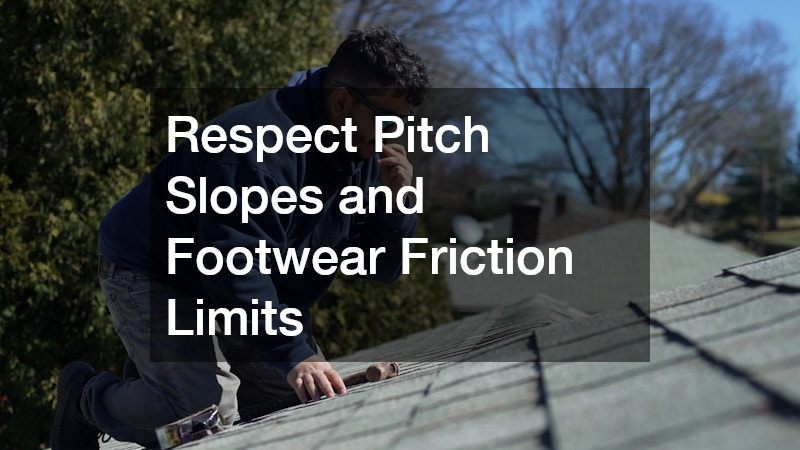
The steepness of a roof, known technically as its pitch, changes the physics of human balance in ways that catch amateur inspectors completely off guard. A roof that looks relatively flat from your driveway can feel like a sheer cliff face once you are standing on it trying to maintain your balance. Standard tennis shoes or work boots are not engineered with the high-friction rubber compounds required to grip granulated asphalt or slick metal paneling securely. A single stray step onto a patch of loose algae, wet moss, or morning dew can instantly eliminate all traction, causing an unstoppable slide toward the eave.
Furthermore, gravity acts aggressively on your center of mass the moment you bend over to inspect a shingle closely, shifting your weight away from your feet. Professional roofers wear highly specialized, high-traction boots with specific tread patterns designed to lock into asphalt granules without damaging them. When dealing with unique, slick materials like metal, they often source materials directly from a trusted metal roofing supply vendor to understand the exact walking restrictions and surface coatings of those specific panels. Without this specialized gear, your risk of a slip-and-fall accident increases dramatically with every degree of roof pitch.
Understanding these microscopic surface dynamics is what keeps professional inspection teams safe during changing weather conditions. If your roof has an aggressive pitch or is showing signs of widespread biological growth, it is crucial to leave the climbing to the experts. Hiring a localized roofer who possesses the exact footwear, physical conditioning, and safety ropes for your specific pitch is the only way to ensure a comprehensive, accident-free inspection.
Avoid Damaging Fragile Aging Shingle Materials
Human beings are heavy creatures, and walking carelessly across an aging roof can easily cause hundreds of dollars in completely accidental damage. As asphalt shingles age, they become brittle due to constant ultraviolet radiation from the sun and cyclical thermal expansion. When an untrained homeowner walks across these fragile surfaces, their boots can crack the shingle mats, tear away protective granules, or break the delicate wind seals that keep the roof watertight. You might climb up to look at one small leak and inadvertently create three new ones just by walking around the circuit.
This is especially true during hot summer afternoons when asphalt becomes malleable and highly susceptible to scuffing and scarring from foot traffic. Professionals understand exactly how to walk on a roof by distributing their weight evenly and stepping precisely on the reinforced sections of the shingles. If you want to protect your home’s exterior investment, hiring a dedicated team for local roof repair ensures that the inspection itself does not accelerate the destruction of your materials. They possess the muscle memory and spatial awareness to evaluate your roof without leaving a trail of broken shingles behind them.
Entrusting the job to an expert guarantees that every step taken on your home is intentional, monitored, and completely safe for your existing building materials. Homeowners frequently assume that an inspection is harmless, but the physical reality of friction and pressure can degrade older materials in a single afternoon. By working with seasoned trade workers, you can ensure that your structural envelope remains intact throughout the diagnostic process.
Prevent Costly Voided Homeowners Insurance Warranties
One of the most financially devastating consequences of a DIY roof inspection happens entirely on paper within your insurance company’s administrative offices. Most modern homeowners insurance policies and manufacturer material warranties contain strict clauses regarding who is authorized to step onto and manipulate the roofing system. If you attempt to inspect or repair a section of your roof yourself and the insurance company discovers amateur footprints or uncertified work, they can void your structural warranty instantly. This leaves you entirely on the hook for any future wind, hail, or water damage restoration costs.
Furthermore, if you intend to file a legitimate insurance claim following a major storm event, documented evidence from a certified professional holds immense weight. Insurance adjusters are trained to look for signs of amateur interference or structural neglect when evaluating a property. Presenting a formal, detailed report signed by a licensed enterprise gives you the solid documentation required to back up your case. Trying to save money by taking your own pictures on the roof can backfire completely if the adjuster attributes the damage to your own clumsy footsteps.
Navigating the complex world of insurance adjusters, claims adjusters, and structural policy guidelines requires a deep understanding of the industry’s legal landscape. When a storm tears through your neighborhood, executing a successful roofing claim requires precision, formal damage mapping, and official estimates. Insurance giants are far more likely to approve comprehensive payouts when the inspection report comes from an accredited, licensed contractor rather than a collection of blurry cell phone photos taken from a homeowner’s ladder.
Recognize Acute Power Line Induction and Shock Risks
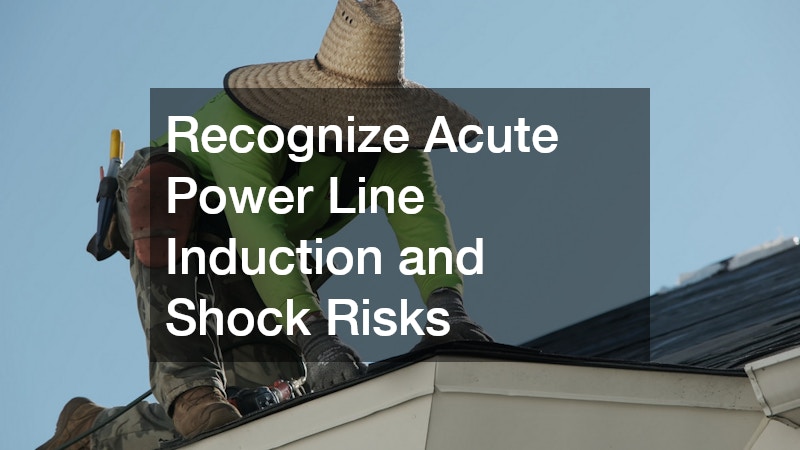
Roofs do not exist in a vacuum; they are surrounded by an intricate web of neighborhood infrastructure, including heavy utility lines and main electrical service drops. When you are up on a roof or moving a massive metal extension ladder around your property, you are operating in dangerously close proximity to live electricity. An aluminum or fiberglass ladder coated in moisture can easily bridge the gap between a power line and your body, causing instantaneous, lethal electrical shock. Furthermore, high-voltage lines can occasionally jump or arc to nearby conductive objects even if you do not make direct physical contact with the wire itself.
Weather conditions like high winds can cause power lines to sway unpredictably, completely changing your clearance zone in a matter of seconds. Professional roofing crews are strictly trained to identify these overhead utility hazards and maintain standard OSHA clearance distances at all times. If your roof lines run dangerously close to your local power grid, it is vital to contact a specialized professional who has the safety gear and training to manage these high-voltage environments. They know how to coordinate with utility companies to ensure the area is safe before beginning any physical work.
Homeowners frequently forget to look up and scan for these aerial hazards when they are focused entirely on the shingles beneath their feet. A momentary lapse in spatial awareness while backing up to look at a chimney can bring your head or shoulder into contact with an active service drop wire. Professional crews utilize non-conductive equipment and specialized spotters whose sole job is to monitor overhead hazards while the primary inspectors analyze the roof deck. This operational safety framework completely eliminates the risk of an electrical tragedy occurring on your property.
Identify Wasp and Wildlife Nest Aggression Vectors
Your roof, soffits, and valleys are prime real estate for a wide variety of territorial wildlife, including stinging insects, raccoons, squirrels, and birds. Wasps, hornets, and yellowjackets love to build hidden nests directly under the eaves, behind fascia boards, or inside attic ventilation caps. When an unsuspecting homeowner climbs onto the roof and disturbs these nesting sites, they can trigger an immediate, aggressive swarm attack. Being swarmed by dozens of stinging insects while balancing on a steep, two-story roof pitch almost always results in a panicked retreat and a subsequent fall.
Furthermore, larger mammals like raccoons will vigorously defend their entry holes into your attic if they have established a nest for their young inside your roof structure. Encountering an aggressive, cornered animal while standing on an unstable surface is an incredibly dangerous scenario that most homeowners are completely unprepared to handle. Professional roofers are trained to scan for biological hazards, entry holes, and wildlife patterns before they ever step onto a roof surface. They work hand-in-hand with pest control experts to clear these biological threats safely and humanely before conducting structural assessments.
If you notice an unusual amount of insect traffic around your ridge vents or see torn shingles near your eave lines, stay off the roof entirely. These are clear signs that your home’s exterior has been compromised by local wildlife, creating a double threat of structural decay and animal aggression. A seasoned technician knows how to approach these animal entry points safely without causing a panic or triggering an attack. They can accurately assess the structural damage caused by the pests while ensuring that the entire zone is safely repaired and sealed against future biological intrusions.
Account for Underlying Internal Deck Moisture Traps
A roof is a multi-layered ecosystem where the visible shingles are merely the outermost defense shield against the elements. Beneath those shingles lies a complex arrangement of underlayment water barriers, ice shields, ventilation channels, and structural decking. When a roof suffers from poor attic ventilation, moisture can accumulate on the underside of the roof deck from regular household activities like showering and cooking. This creates an internal moisture trap that rots the roof from the inside out, even if the outer shingles look absolutely flawless to an untrained observer.
A homeowner walking across the surface has no way of knowing that the plywood beneath them has been transformed into a soggy, spongy sponge due to poor airflow management. Professionals utilize high-tech diagnostic tools, including thermal imaging cameras and digital moisture meters, to see through the shingles and map out these internal moisture traps accurately. If your property features modern design accents, understanding how condensation behaves under those systems requires specialized insight. Experts understand the exact ventilation profiles and surface coatings required to mitigate internal decay.
Without these specialized diagnostic tools and structural training, a DIY inspection is nothing more than guesswork that puts your physical safety at risk. If you suspect that your home is trapping humidity or notice an unexplained mildew smell in your upper floors, it is time to bring in professional support. A comprehensive assessment will pinpoint the exact breakdown in your ventilation loop, saving your deck from catastrophic moisture failure.
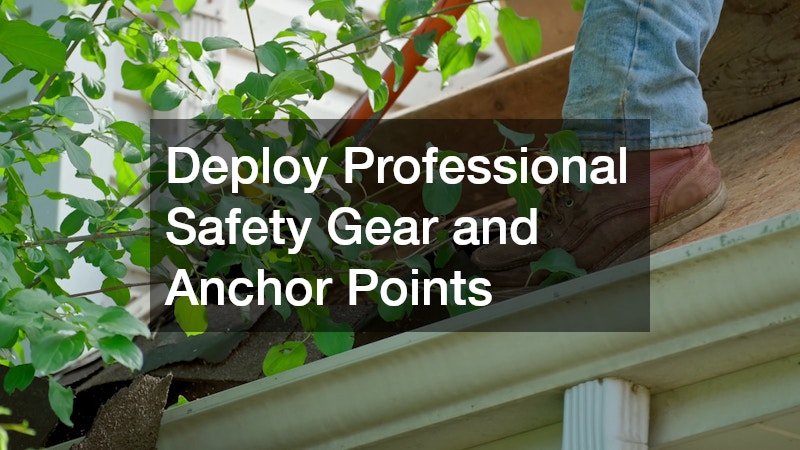
Deploy Professional Safety Gear and Anchor Points
The single greatest difference between a DIY enthusiast and a professional roofer is the presence of an OSHA-compliant, engineered fall protection system. True safety on a roof requires a full-body harness, a shock-absorbing lanyard, a heavy-duty roof anchor rated for thousands of pounds of force, and a dynamic lifeline. Simply tying a standard nylon rope around your waist and anchoring it to a tree or a bumper in your driveway is an absolute recipe for disaster. If you fall, a non-compliant rope system can cause severe internal injuries or snap completely under the sudden gravitational load.
Installing a certified temporary or permanent safety anchor into your roof’s ridge requires specific knowledge of structural framing and fastener pull-out capacities. Professional roofing crews know exactly how to locate the main ridge beam and secure their anchoring plates without causing permanent structural leaks or framing damage. If you do not possess this specialized safety gear and the technical engineering knowledge required to deploy it, stepping onto a roof is an unacceptable gamble with your life. The safety equipment alone costs more than a standard professional inspection, making the DIY approach completely impractical from a pure cost-benefit perspective.
When you weigh the minimal financial savings of a DIY roof inspection against the terrifying potential of permanent physical injury, voided home warranties, and hidden structural damage, the choice becomes clear. Your roof is a highly engineered, dangerous environment that demands respect, specialized safety equipment, and years of hands-on structural training to navigate successfully. Taking a step back and trusting your home’s highest point to licensed, insured experts is not a sign of weakness; it is the smartest, most fiscally responsible decision a homeowner can make to preserve their property’s long-term value. Keep your ladder in the garage, pick up the phone, and let the professionals handle the heights while you enjoy the peace of mind that comes with a truly safe, expertly verified home.